Condo Rents Have Gone Nowhere for 6 Months. If You're a Landlord, Pay Attention.
Median condo rents in Singapore have been stuck at $4,300 a month since late 2025. Six months of basically zero movement. If you’ve been watching the rental market waiting for the next leg up, this is the quiet part nobody’s talking about.
The party, at least for landlords, might be winding down.
The numbers tell the story
Overall condo rental prices ticked up just 0.6% month-on-month in January 2026. The rental index moved from 144.0 to 144.8. Technically an increase. Practically, it’s noise.
Year-on-year, rents are up about 2.5%. Not bad, but compare that to the 20-30% annual spikes we saw in 2022 and 2023. The era of “just list it and watch offers pour in” is over.
The OCR led with a 0.9% monthly gain. CCR managed 0.4%. RCR was flat.
If your investment condo is in the RCR, your rental growth has literally stalled.
7,000 units are coming
Here’s where it gets interesting (or concerning, depending on which side of the lease you’re on).
Private home completions are jumping from 5,249 units in 2025 to about 7,000 units in 2026. That’s a 33% increase in new supply hitting the market this year.
Every completed unit is either an owner moving in (one less renter in the market) or a new rental listing (more competition for tenants). Either way, it puts downward pressure on rents.
And that’s before you factor in the HDB side. Remember the MOP wave? 13,480 HDB flats reaching their minimum occupation period this year. Some of those owners will upgrade to condos (freeing up HDB rental stock), others will start renting out their flats (adding supply to the HDB rental pool).
Supply is rising from multiple directions simultaneously.
The yield math is getting tighter
Let’s do some quick back-of-napkin math.
A typical OCR 2-bedder bought at recent new launch prices, say $1.3 million. Rental market says you’re looking at maybe $3,200 to $3,600 a month. That’s a gross yield of roughly 3% to 3.3%.
Strip out maintenance fees ($300-400/month), property tax, agent commissions, vacancy periods. Your net yield is probably closer to 2.2% to 2.5%.
With SORA at around 1.12% and fixed rates at 1.3% to 1.5%, you’re still cash-flow positive on most loans. Barely. And only if your unit isn’t sitting vacant between tenants.
The margin of error has gotten very thin.
What tenants should do
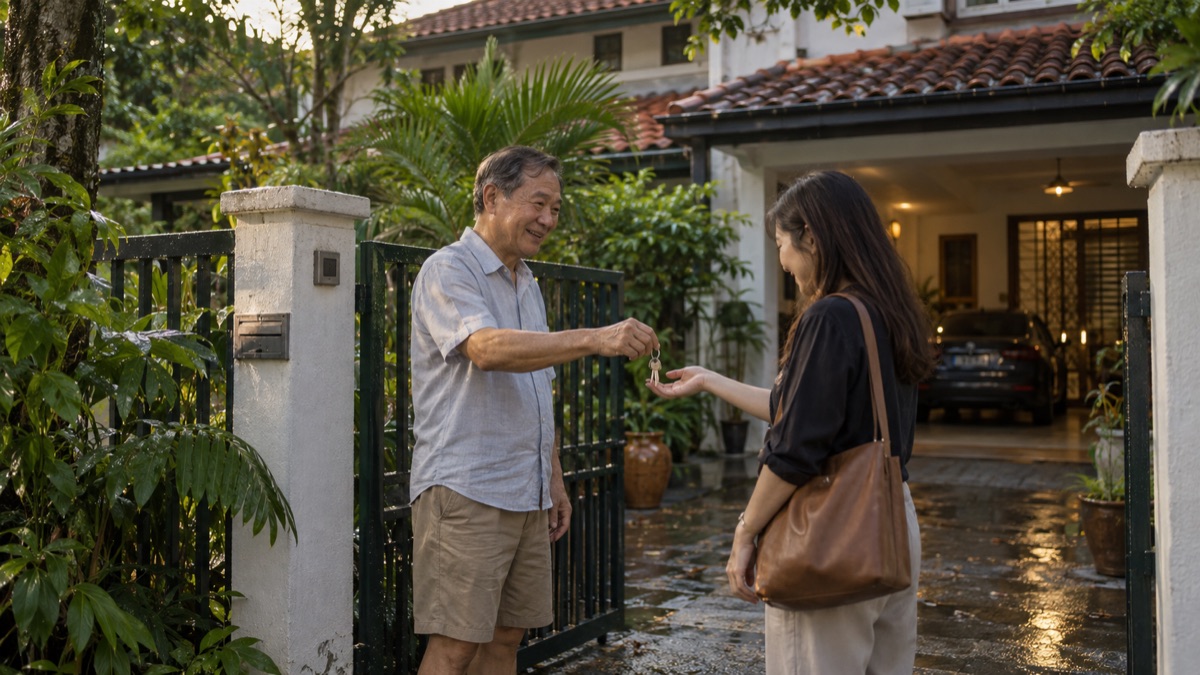
If you’re renting right now, this is probably the best negotiating position you’ve had in 3 years. Landlords know the supply picture. Smart ones would rather give you a 5-10% discount than risk a month or two of vacancy.
When your lease comes up for renewal, don’t just auto-renew at the same rate. Push back. Show comparable listings. The data supports you.
Especially if you’re in a district with heavy completions coming, like Jurong, Tampines, or the Greater Southern Waterfront area.
What landlords should do
First, don’t panic. Rents aren’t crashing. They’re plateauing. There’s a big difference.
But you do need to adjust expectations. The days of 5-10% annual rental increases are behind us for now. Budget for 0-3% growth this year, maybe less.
A few practical moves:
Lock in good tenants. A 2-year lease with a reliable tenant at a slight discount beats cycling through 3 tenants in 4 years. Vacancy kills returns faster than a modest rent reduction.
Maintain your unit. In a market where tenants have options, a well-maintained unit with updated fittings stands out. A fresh coat of paint and new appliances can be the difference between a 2-week vacancy and a 2-month one.
Watch your holding costs. If your mortgage resets this year, the good news is rates are lower than 2023-2024 levels. Consider locking in a fixed rate while they’re still in the 1.3-1.5% range. That protects your cash flow even if rents soften further.
The bigger picture for investors
If you bought an investment property in 2020-2021, you’re probably still doing fine. Entry price was lower, your rental yield started from a decent base, and any capital appreciation is bonus.
If you’re buying now purely for rental yield, you need to be very selective. The unprofitable condo data shows that even prime addresses don’t guarantee returns. Entry price matters more than location prestige.
The best rental investments in 2026 will probably be in OCR areas near MRT stations, where purchase prices are lower and tenant demand stays resilient because of proximity to industrial parks and business hubs. Think Jurong East, Tampines, Woodlands. Not glamorous. But the math works.
Don’t mistake a plateau for a crash
I want to be clear: this isn’t a doom-and-gloom story. Singapore’s rental market is supported by structural demand: expat relocations, corporate housing, the general shortage of housing relative to population growth.
But the market has shifted from “landlord’s paradise” to “balanced”. Tenants have more leverage. Landlords need to work harder. Yields are thinning.
If you’re a landlord, the worst thing you can do is pretend it’s still 2023.
It ain’t.