The Landed 'Pit Stop' Strategy Still Works. But the Margin for Error Is Shrinking.
The landed “pit stop” is still one of the few sane ways into Singapore’s landed market. You buy the ugly old house, do enough work to make it properly liveable, hold for 4 years, then sell and move up.
It’s not glamorous. But when a brand new landed home can easily become a $7 million to $10 million decision, this is one of the few entry routes that hasn’t become totally absurd.
Why this strategy exists
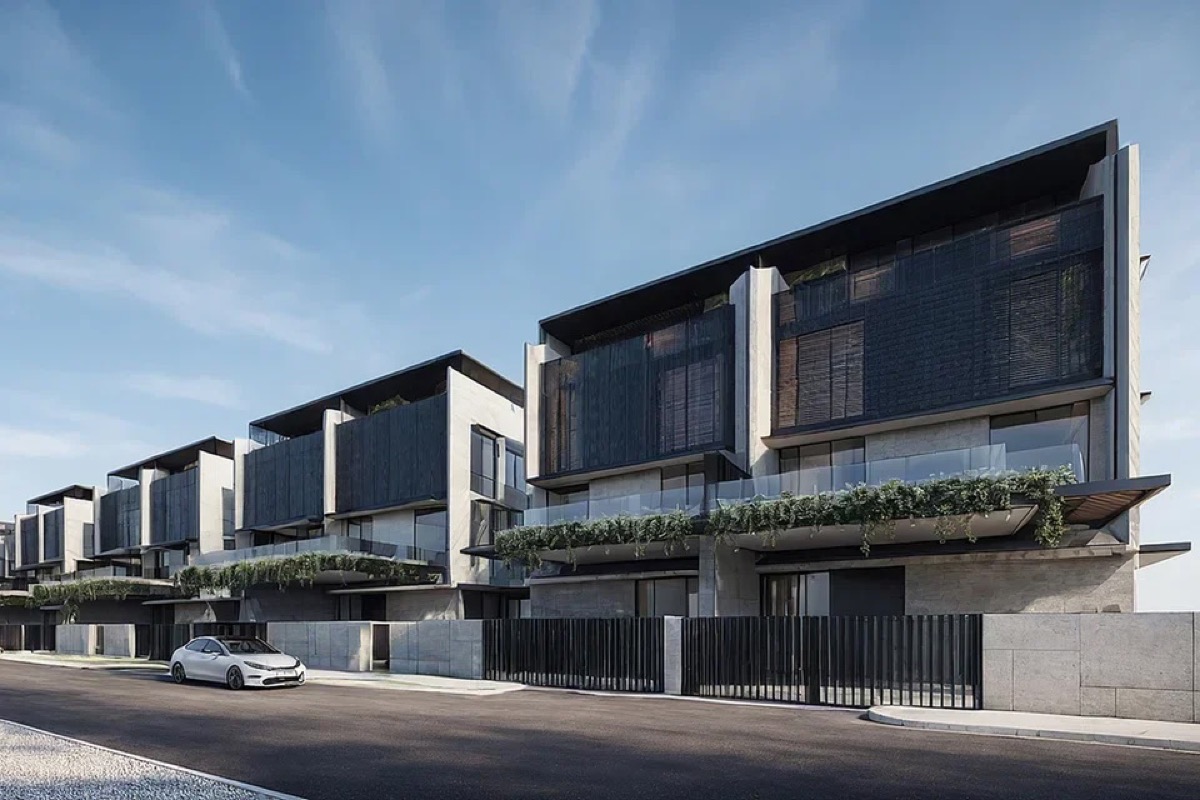
Landed home prices have risen 48% over the last 5 years, with the median now at $4.9 million, according to OrangeTee’s Christine Sun. Entry-level landed, meaning an intermediate terrace with roughly 1,700 sqft of land, is already above $6.2 million for older stock. Brand new houses are closer to $7 million. Corner terraces by boutique developers can start from $8.5 million.
And that’s before rebuilding. Construction costs have risen 20% to 30% over the last 3 years because of labour shortages and materials inflation. Arsea Group’s Raj Nainani puts high-spec build costs at $480 to $600 psf of built-up area in 2026. On a typical 2.5-storey terrace with 3,000 sqft of built-up space, that’s roughly $1.8 million to $2.2 million just for the rebuild, before land cost.
That’s why the pit stop exists. Not because buyers love compromise, but because the alternative is writing a huge cheque on day 1.
What the pit stop actually looks like
You buy an old 1- or 2-storey terrace in an estate with renewal momentum, places like District 15 (Opera Estate), District 19 (Serangoon Gardens), or District 13 (the MacPherson/Sennett pocket). Older units in these locations can still transact at around $4 million to $4.2 million. That’s not cheap. It’s just meaningfully cheaper than the polished version next door.
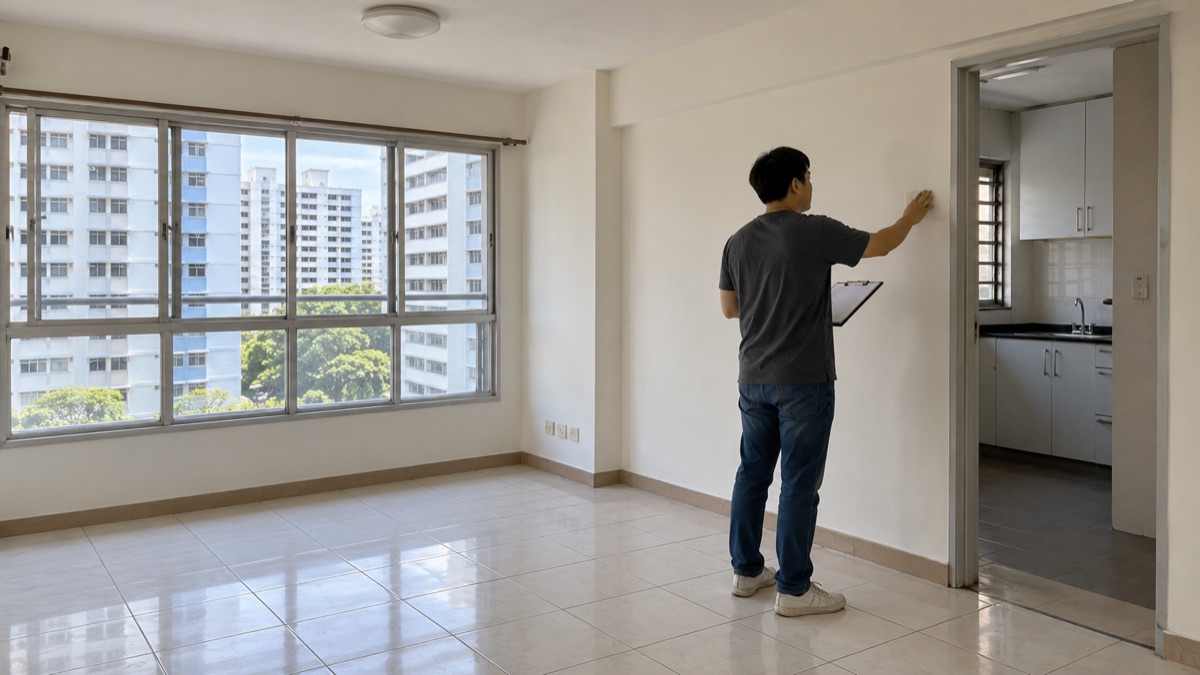
Then you spend $500K to $800K on addition-and-alteration (A&A) works rather than a full rebuild. Done properly, that gets you a house that’s functional, comfortable, and decent enough to host people in without apologising for every corner. Not perfect. But properly liveable.
Then you hold for 4 years, clear the current SSD holding period, and reassess. By then the estate may have appreciated, more nearby houses may have been rebuilt, and your own household income is probably higher too. You sell, roll the proceeds forward, and upgrade again.
Why it works, for now
The whole strategy runs on the gap between tired and turnkey. Right now there’s still a $2 million to $3 million spread between a worn old terrace and a newly rebuilt equivalent on the same street. That’s wide enough to create real upside, even after A&A costs and transaction friction.
But that gap won’t stay wide forever. Kapa Design Co’s Benedict Choa points to estates like Opera Estate, Serangoon Gardens, and parts of MacPherson/Sennett as “ripe for renewal” precisely because they still have a high concentration of underutilised old houses. As more of them get rebuilt, the estate resets and the arbitrage gets thinner.
There’s also the question of what “good enough” means. A&A works are cheaper than a full rebuild, but they’re not cosmetic. You’re dealing with structural works, rewiring, plumbing, waterproofing, and usually a full rethink of the kitchen and bathrooms. Buyers who treat this like a light facelift usually end up learning expensive lessons.
Who this works for
OrangeTee’s Geryl Lim describes the typical buyer as a HENRY: high earner, not rich yet. Usually it’s a dual-income professional couple in their 30s, sometimes with parental help on the down payment. They’re not rich enough for brand new landed, but they’ve also realised that waiting until they feel rich enough may be the most expensive move of all.
The calculation is pretty blunt: do you spend the next few years sitting in a condo while landed prices keep moving, or do you enter earlier at a lower base, build equity, and let time do some of the work?
For this buyer profile, the answer is usually obvious.
The risk most people underprice
A&A works are where the spreadsheet gets rude. Old houses hide problems: tired pipes, termite damage, weak waterproofing, cracked drains, foundations that looked acceptable until the contractor opened things up. A $600K refurb budget can quietly become $900K. If your plan only works when everything goes right, it probably doesn’t work.
And you’re buying into a neighbourhood mid-transition. Some stretches of Opera Estate and Serangoon Gardens already look sharp. Others are still a mix of beautiful new builds and tired originals. Construction noise, uneven streetscape, neighbours who haven’t sold, that’s part of the package.
None of that kills the strategy. But it does mean this only works if you buy the right ugly house, keep the renovation disciplined, and remember this is a stepping stone, not a vanity project.
Turn it into an ego renovation and you’ll kill the margin yourself.