Overseas Property Scam: What Every Investor Should Learn
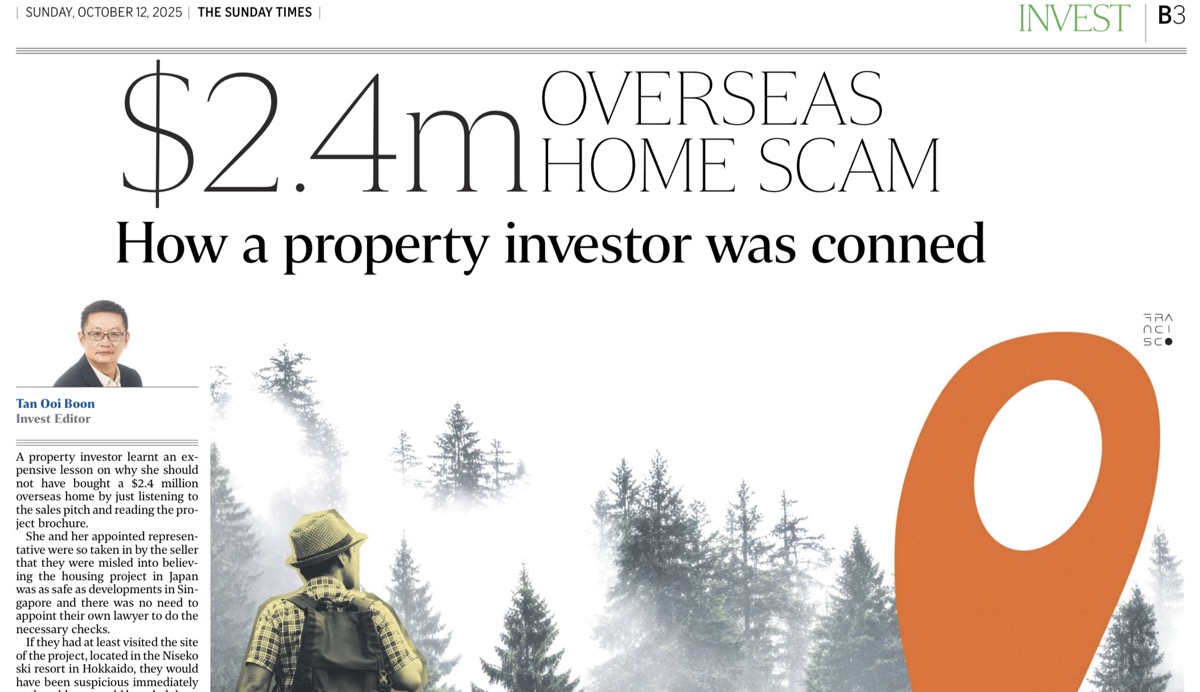
A Singapore property investor learnt a painful lesson after losing $2.4 million to a housing scam in Japan’s Niseko resort. What seemed like a premium ski-resort investment turned out to be a fake project — the developer didn’t even own the land.
The victim, Ms Astrawat Aluwi, and her representative were persuaded by sales agents that the development was as safe as any in Singapore. They skipped hiring a lawyer and relied on glossy brochures and reassuring sales talk. By the time they checked with a Japanese lawyer two years later, it was too late. The court later ruled that she had been defrauded and ordered the scammers to repay her losses with interest.
The case offers a timely reminder for anyone tempted by slick overseas property pitches. Here are the key takeaways.
1. Never buy based on sales talk alone
Salespeople can make any deal sound safe. Always verify independently — ask who owns the land, whether permits have been issued, and whether construction has started. Don’t rely on “guarantees” or promotional brochures. If a project is truly solid, it can withstand scrutiny.
2. Don’t compare overseas prices with Singapore
Cheap does not mean value. Many investors assume that buying a $500,000 overseas home is a bargain compared with Singapore’s $1 million condos. But overseas markets carry different legal, regulatory and liquidity risks. Prices reflect that — not opportunity.
3. Always do a site visit
If you’re buying a property abroad, make the trip. A short visit could have saved the victim — the advertised site was actually a forest, not a construction zone. Seeing it for yourself reveals what brochures hide.
4. Don’t fall for sales pressure
Scammers often use urgency tactics, saying units are “selling fast” or that discounts will “expire soon.” Never rush into signing. Real projects don’t need to corner you into a decision.
5. Work only with reputable sellers and lawyers
Hire your own lawyer in the country of purchase, even if the agent says it’s unnecessary. Use professionals who can check titles and ownership records. Reputable developers are transparent and will not object to independent verification.
Final Thoughts
The $2.4 million Niseko scam is not an isolated case. Similar overseas property frauds have reached Singapore courts in recent years. They all share one pattern — buyers who skipped due diligence because the offer sounded too good to resist.
Before wiring a cent overseas, verify, visit and vet. If the deal only looks good from afar, it probably isn’t good at all.
View Larger
View Larger