More Landed Homes Could Change Hands in 2027. Will Prices Follow?
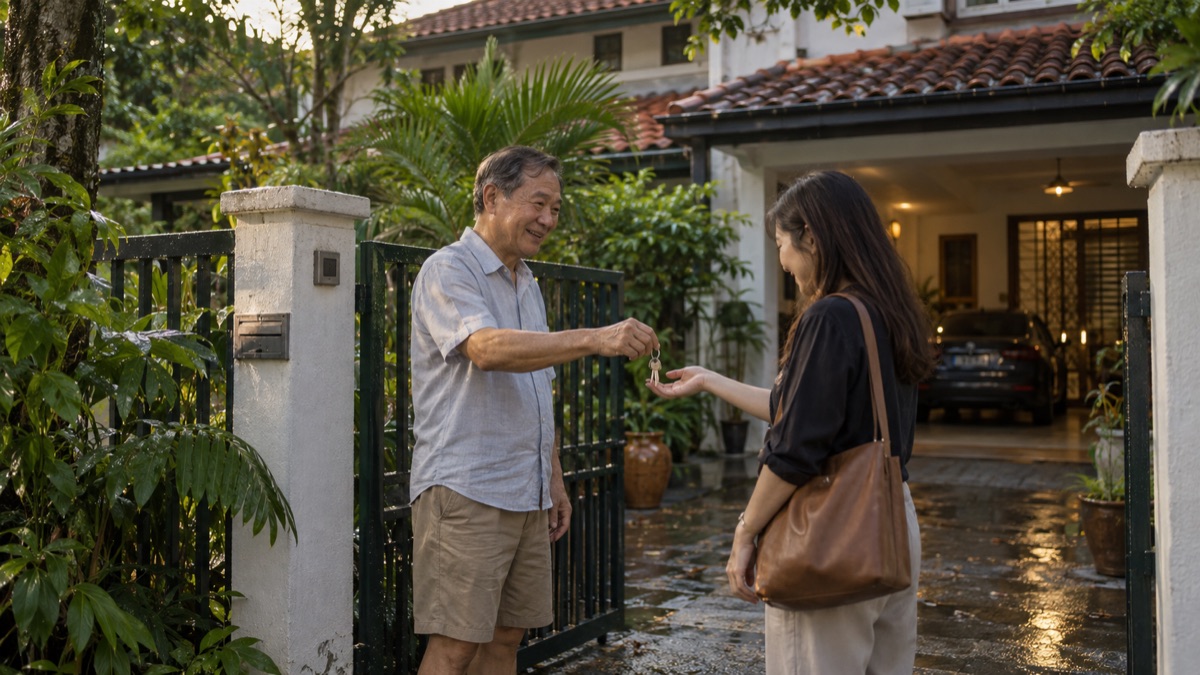
Imagine a couple living in a landed house after their children have moved out. They still love the neighbourhood, but the stairs, repairs and money tied up in the property are getting harder to justify.
Removing the 15-month wait to buy a resale HDB flat makes their next move easier. It also puts another landed house within reach of a family that wants one.
That’s why I expect more landed homes to change hands in 2027. My price call: around 8% growth for 2026 if the latest momentum holds, followed by roughly 3% in 2027. More activity, slower appreciation.
2026 is already stronger than “low single digits”
URA’s landed price index ended 2025 at 253.1. Its Q3 2026 flash estimate puts it at 265.6, after a 2.8% quarterly increase.
That makes the gain over the first 9 months 4.9%. If Q4 repeats Q3’s 2.8% rise, the compounded full-year increase would be 7.9%, which I’d round to 8%.
| Period | Landed price growth | What it means |
|---|---|---|
| First 9 months of 2026 | About 4.9% | Based on the Q3 flash estimate |
| Full-year 2026 | About 8% | My estimate if Q3 momentum continues |
| Full-year 2027 | About 3% | My central forecast, with a working range of 2–4% |
These are nominal, year-end-to-year-end changes in the broad landed index. The forecasts are my judgement, and Q3’s flash figure can still be revised.
So why expect a slowdown next year? The policy makes selling easier, but it doesn’t give the next buyer a larger budget.
An easier exit can unlock transactions
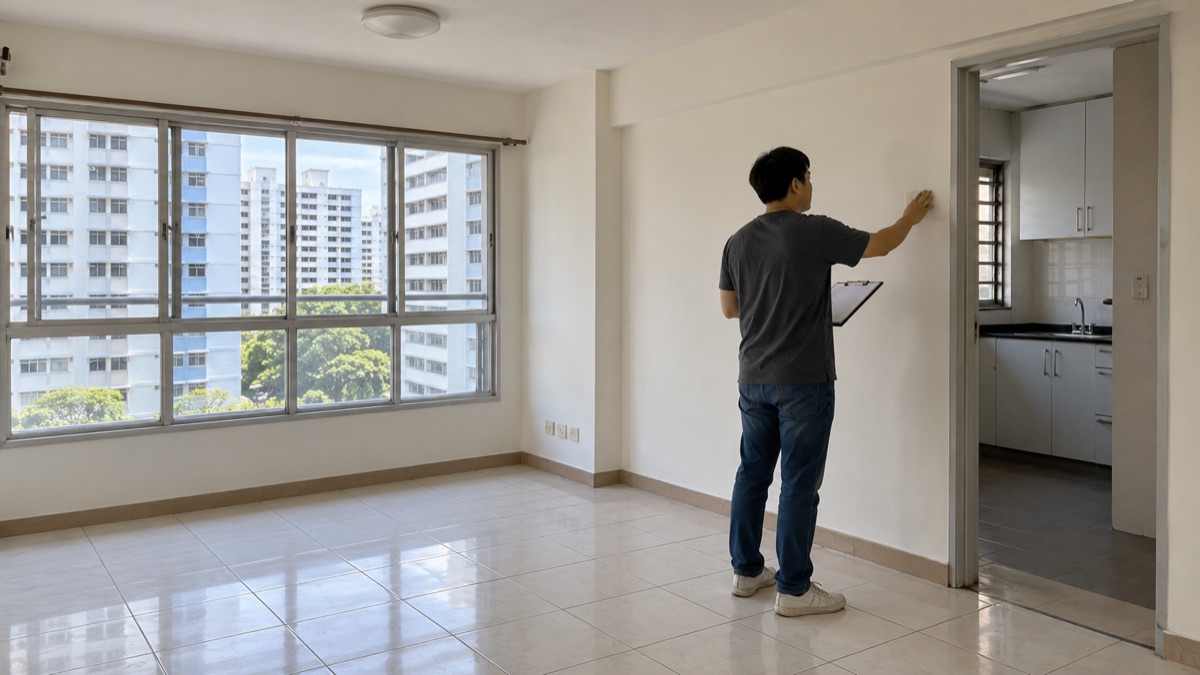
The 15-month wait was removed on 28 July 2026. Eligible private owners can now move directly into a non-subsidised resale flat without taking an HDB loan, subject to the usual eligibility and disposal rules.
That removes a practical headache: selling the house, renting somewhere else, then buying the flat. For someone trying to release retirement cash, avoiding an extra move matters.
But this isn’t a brand-new exit for every older owner. Those aged 55 and above already had an exemption when buying a 4-room or smaller resale flat, and the separate 30-month restrictions for subsidised purchases remain.
I expect the change to bring forward some sales that owners had postponed. A rightsizer sells to an upgrader, who may sell a condo to fund the purchase; several transactions can happen without anyone paying a dramatically higher price.
The early evidence also argues against getting carried away. In its Q3 update, HDB said it hadn’t observed a significant increase in resale prices or purchases by current and former private owners since the removal.
An easier exit. Still early days.
Ageing creates sellers, but families still want space
Singapore’s demographics support more rightsizing. Residents aged 65 and above now make up 19.5% of the resident population, compared with 12.4% in 2016, according to Population Trends 2026.
Average household size has also fallen from 3.39 people in 2015 to 3.06 in 2025. A large house can become surplus space, especially when maintaining it starts to feel like a part-time job.
Those national figures don’t tell us the ages of landed owners, so they aren’t proof of a coming wave of listings. But they explain why the incentive to move into something smaller will probably strengthen.
Demand hasn’t disappeared either. Resident household numbers rose to about 1.49 million in 2025, even as households became smaller, while the General Household Survey found 13.4% of households had monthly market income of at least $30,000, up from 7.4% in 2020.
Market income includes investment and rental income, so that isn’t a count of mortgage-ready landed buyers. It does suggest a growing pool of affluent households alongside the owners considering an exit.
The economy helps too: the official 2026 GDP growth forecast is 4.5–5.5%. That supports confidence this year; it doesn’t guarantee another strong year in 2027.
Scarcity supports prices, but listings still matter
Singapore had 73,902 completed landed homes in Q2 2026, just 293 more than a year earlier. That’s roughly 0.4% growth in stock, according to URA’s stock and vacancy data.
Selling an existing house doesn’t create another plot. It changes who owns it, which is why more rightsizing needn’t undermine the long-term scarcity argument.
But buyers bid against the homes available today. If several owners list in the same neighbourhood, buyers gain choice even when the island’s total landed stock barely changes.
There’s already a caution in the data: landed vacancy rose from about 8.4% in Q2 2025 to 10.9% in Q2 2026. Vacant doesn’t mean distressed or listed for sale, but scarcity alone isn’t enough to assume every house will find an eager buyer.
My 2027 call: up, with more room to negotiate
I expect transaction volume to rise more clearly than prices in 2027. Easier exits should help buyers and sellers meet, while limited new landed supply and affluent family demand support a modest price increase.
That’s the reasoning behind about 3% growth, rather than another 8%. A broad fall isn’t my base case, but a recession or a sustained build-up of unsold listings could push the outcome towards flat or negative growth.
Well-located homes with sensible layouts and manageable renovation costs should hold up better. Awkward plots, ambitious asking prices and houses needing expensive work may face longer negotiations, especially once buyers add the hidden costs of landed ownership.
My crystal ball has no special access to next year’s caveats. But I’d be more comfortable buying a good house at a defensible price than paying tomorrow’s price because someone says the market is “opening up”.