URA's GFA Review: What Could Actually Change?
URA is reviewing its Gross Floor Area guidelines, and there is more to the announcement than a vague promise to give developers flexibility.
The final rules are not ready, but the review’s stated scope and the industry discussion around it point to a few possible changes.
1. Allow more floor space on suitable sites
One possible lever is allowing a higher volume of GFA, which means more floor area can be built on a site.
That could make a difficult redevelopment financially workable. It may produce more homes, commercial space or other usable areas, depending on what URA approves.
It does not mean every plot will suddenly get extra floors. Building height, traffic, infrastructure and the surrounding neighbourhood still matter.
2. Let developers use GFA more flexibly
Another idea is giving developers more freedom over the mix of uses within the permitted GFA.
For example, a mixed-use development may be allowed to divide its space differently between homes, offices, shops and other approved uses. This could help an older building adapt to what the neighbourhood needs instead of being trapped by an outdated mix.
The locations and permitted uses have not been announced.
3. Reward buildings that handle heat better
URA will also consider encouraging building features that improve heat resilience and thermal comfort.
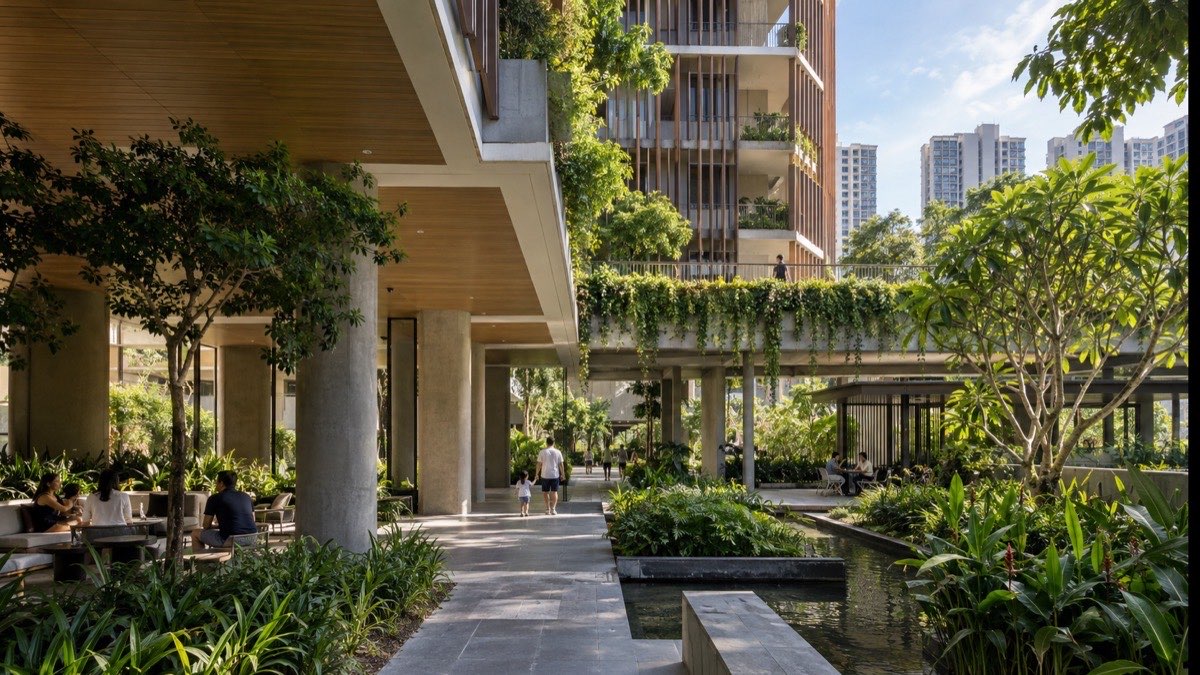
The qualifying features have not been named. But practical candidates could include deeper sunshades, breezeways, sheltered terraces, better-ventilated common areas and greenery that genuinely cools the building.
These examples are my interpretation, not confirmed rules. The incentive could eventually take the form of extra GFA or an exemption that stops a qualifying feature from consuming as much of the normal GFA allowance.
This matters because developers naturally protect every square metre that can be sold. Without an incentive, a generous shaded space can lose to another enclosed room surprisingly quickly.
4. Let conserved buildings earn floor-space credits
This is the most interesting proposal, although it came from the industry rather than URA.
Pontiac Land chief executive David Tsang pointed to Sydney, where owners who conserve eligible heritage buildings can earn floor-space credits. Under the City of Sydney’s scheme, those credits can be sold and allocated to another development.
A Singapore version could help pay for the expensive work of maintaining a conserved building. It would reward owners for looking after the property before it becomes run-down, rather than making redevelopment the only attractive outcome.
We already use GFA as a reward
This approach is not entirely new in Singapore.
Under URA’s CBD Incentive Scheme, qualifying older office developments in Anson and Cecil Street can receive up to 30% more development intensity when converted to certain mixed uses. Qualifying projects around Robinson Road, Shenton Way and Tanjong Pagar can receive up to 25% more.
The Strategic Development Incentive scheme can also consider changes to GFA, land use and building height for qualifying redevelopment proposals in strategic areas.
So the machinery already exists. The question is what developers will have to provide in return for the extra flexibility.
What I hope comes out of it
More GFA by itself is not automatically good for buyers. It could simply become more saleable area and more units sharing the same facilities.
The better trade is extra development value in return for cooler buildings, useful public spaces, thoughtful mixed uses and properly maintained heritage.
That is the detail worth watching when URA publishes the actual rules.
Planning guidelines can change. Check the latest URA requirements before making a property or redevelopment decision.