Tengah Turned 5.4ha of Housing Land Into Parkland. Nature Actually Won This Round
Tengah’s “forest town” promise just became a little more concrete.
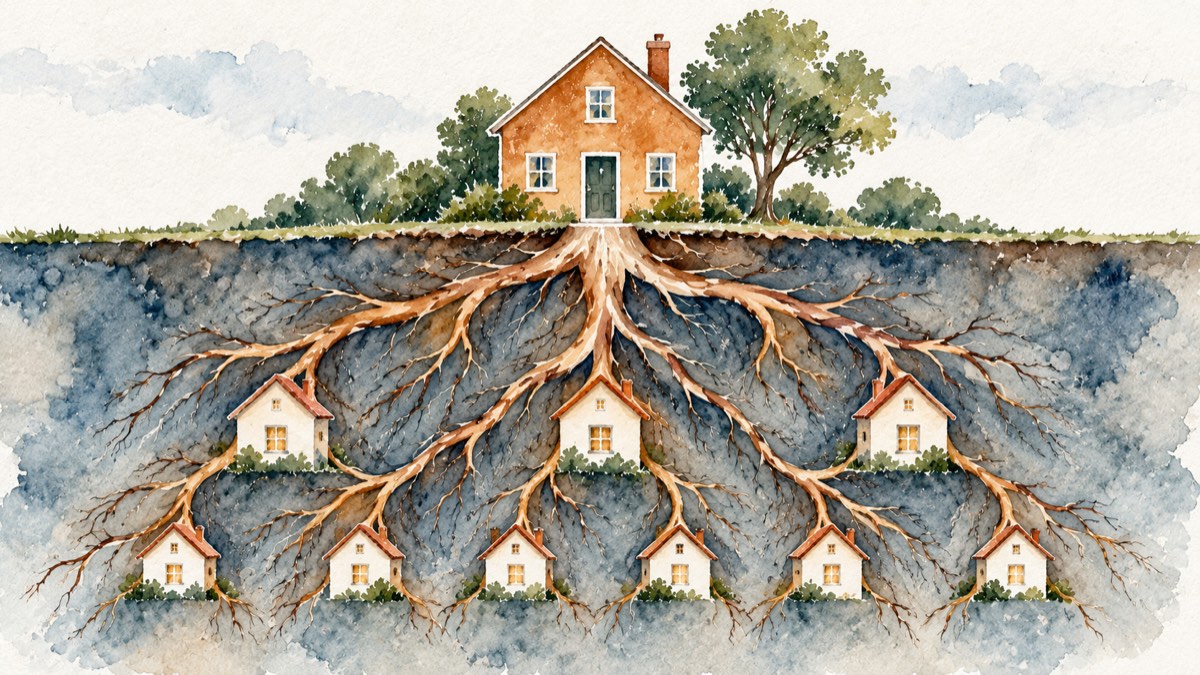
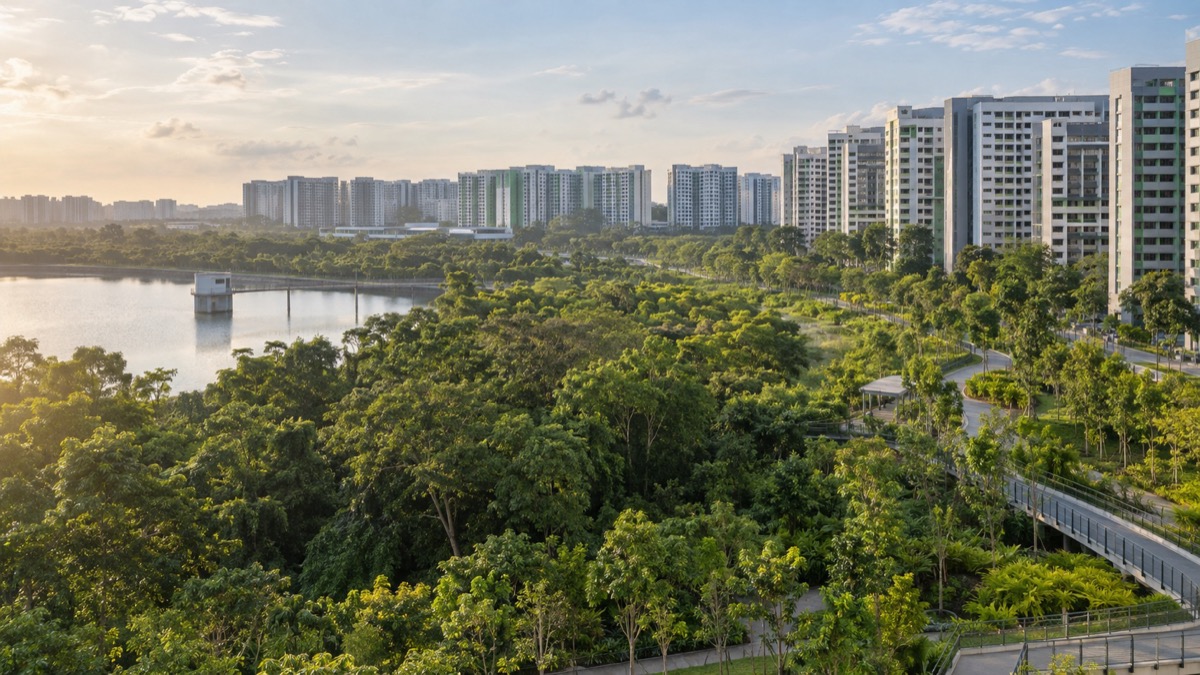
About 5.4ha of land around Tengah Service Reservoir that was previously zoned for housing has been rezoned as parkland. That’s roughly eight football fields taken out of the residential plan to retain more wildlife habitat.
In Singapore, where land already marked for housing usually stays marked for housing, this is a genuine surprise. Nature actually won this round.
What actually changed
The change appears in URA’s Master Plan 2025 and was approved in May 2025. It came back into the spotlight after HDB published its response to public feedback on the environmental study for the future Tengah Town Centre.
HDB said it made the 5.4ha change after consulting nature groups and considering the Recommended Area of Conservation identified in an earlier 2021 environmental study. Across Tengah, about 140ha of natural green and park areas has now been safeguarded in the Master Plan.
This is a real land-use change, not another rendering with extra trees added around the edges.
The 5.4ha park and town centre are different sites
This detail is easy to miss.
The 5.4ha plot sits around Tengah Service Reservoir. The new HDB report is mainly about a separate 16.7ha site planned for the future town centre around the upcoming JS3 station on the Jurong Region Line.
Within that town-centre study area, about 0.8ha forms part of a wider Recommended Area of Conservation. HDB said it will study that corridor together with the neighbouring Site 2 and seek to retain it where possible.
So there are 2 related but different planning moves: a confirmed 5.4ha rezoning to parkland, and a 0.8ha conservation corridor still being assessed as part of the wider ecological network.
Usually, development still wins
Look at Lentor Hills.
The area was once a roughly 30ha secondary forest already designated for private housing. Residents and the Nature Society (Singapore) pushed for parts of it to be conserved, including its freshwater streams.
The feedback wasn’t completely ignored. Two green plots were retained, the future Hillock Park kept existing greenery, and developers were required to provide extensive landscaping, sky terraces and green buffers.
But the basic outcome didn’t change: the forest became a residential estate. Lentor Gardens Residences, launched in 2026, is the seventh residential project in the precinct.
Nature got mitigation. Development got the land.
That has been the familiar compromise in Singapore. Once a site is gazetted for homes, the discussion is usually about how to clear it more carefully, where to plant replacement trees and how much greenery to weave back into the finished estate.
Tengah is different because part of the land was actually taken out of the residential plan.
Why more greenery matters
Tengah sits between Singapore’s western and central catchment forests. Its remaining vegetation helps wildlife move between otherwise separated green areas.
The latest survey for the town-centre site recorded 47 plant species and 108 fauna species. Ten of the animal species were considered conservation-significant, including the Sunda pangolin, Straw-headed Bulbul and Spotted Wood Owl.
The report is also unusually direct about the trade-off. Measures such as phased vegetation clearance and wildlife management can reduce harm, but they can’t fully replace habitat that is permanently removed.
Keeping a larger connected patch is therefore more useful than scattering decorative greenery between blocks. A pangolin isn’t impressed by a rooftop planter (fair enough).
And this isn’t only about wildlife. Singapore is getting hotter and denser. Established trees, connected forests and proper parks give us shade, cooler surroundings and breathing room that a landscaped condo deck can’t fully replace.
We need homes. We also need places that aren’t homes, roads or shopping malls.
Feedback made a difference
HDB received 142 responses to the environmental report for Tengah Site 1. People raised concerns about losing greenery and suggested wider buffers, mature-tree retention and developing brownfield land instead.
Public consultation can sometimes feel like being asked what colour the bulldozer should be. That’s why the 5.4ha rezoning matters: it shows feedback from nature groups can change the land-use plan itself, even after residential development has been mapped out.
It doesn’t mean every forest can or should be frozen in place. Singapore still has to house people, and Tengah’s town centre, transport links, shops and community facilities are needed by a growing population.
But development shouldn’t be the automatic winner every single time.
What it means for Tengah residents
The long-term benefit is straightforward: more permanent green relief in a town that will still become much denser.
That matters because more than 12,000 Tengah households had collected their keys by December 2025, while HDB plans about 30,000 flats for the town. The town centre, transport links, shops and community facilities still need to arrive as the population grows.
We previously looked at that growing-town story through Tengah Garden Residences, the first private condo in Tengah. This parkland decision is the other half of the story: what gets preserved while all those new homes and amenities are being built.
This parkland decision doesn’t remove that need. It shows that the eventual town can add those amenities while giving up some developable land where the ecological case is strong.
For residents, the practical questions are now about execution: when the expanded park will open, what it will include and how it will connect to walking and cycling routes. HDB hasn’t announced those details yet.
Yes, permanent parkland could make nearby homes more pleasant and possibly more attractive. But that is a side effect, not the story. HDB hasn’t said how many homes the plot might once have held, and there is no reason to turn a conservation decision into another instant property-price prediction.
My take
This is probably the clearest proof so far that the forest-town idea can affect actual land allocation.
Tengah still has the awkward reality of a young estate: construction, incomplete amenities and transport that is arriving in stages. The parkland doesn’t fix those short-term issues, but it improves the version of Tengah residents may live with for decades.
The bigger point is that gazetted plans aren’t sacred. Feedback was heard, a housing plot became parkland, and Singapore will keep a little more of its greenery.
We don’t get many wins like this.