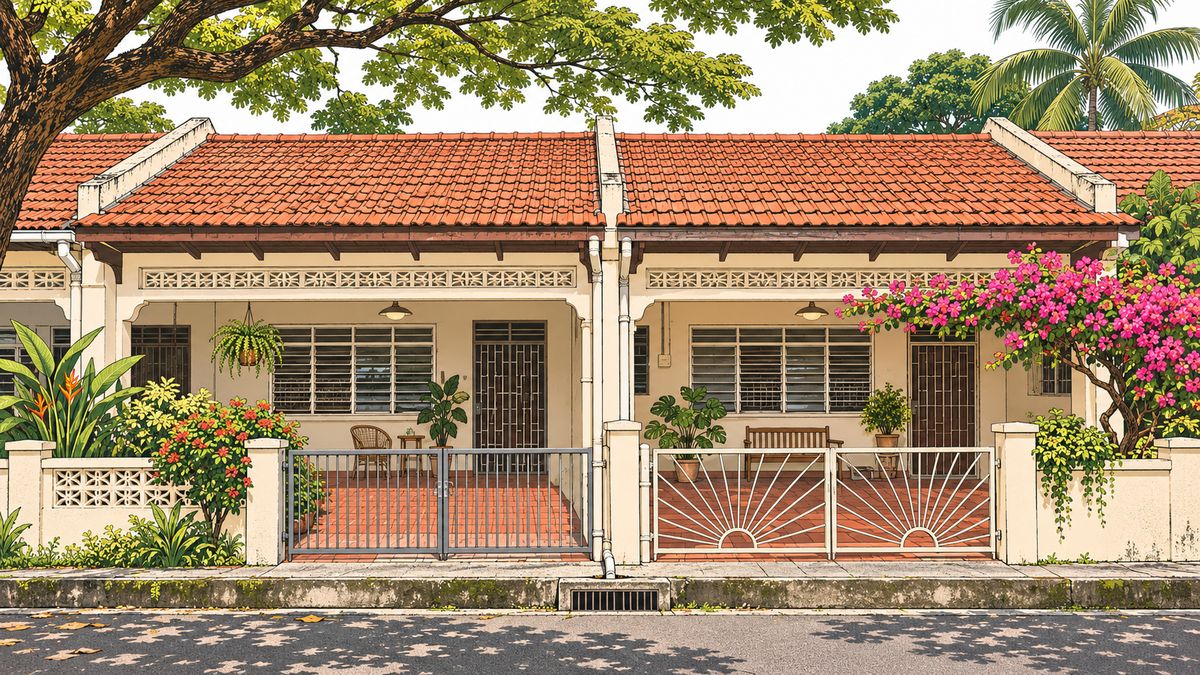
Why Two Houses on Andrews Terrace Sold $1.24 Million Apart
On 31 August 2026, $2.65 million bought a 99-year leasehold terrace house on Andrews Terrace near Sembawang Park. A few doors down, a freehold terrace on a similar-sized plot sold for $3.89 million that same day. If you’re making an offer on a third house on that street, the first thing I’d ask for is its title.
What the extra $1.24 million bought
The freehold buyer paid about 47% more than the leasehold buyer. Measured against the freehold price, the leasehold buyer paid about 32% less.
The two houses were close in age. The freehold terrace was built in 2005 and the leasehold one in 2008. The sales records give the land area but leave out the size and condition of each house, so it’s hard to tell how much of the gap came from tenure alone.
In Joyce Lim’s report for The Straits Times, 99.co’s Luqman Hakim put the freehold premium on Andrews Terrace at under 10% in 2011, around 25% to 30% in 2019 and 2020, and roughly 40% to 50% in 2026. The 2011 comparison paired new leasehold houses with freehold resales. Read the original report.
For an offer on a leasehold terrace, I’d start with recent sales of terraces with similar land areas and years left. Then I’d look at the floor plans and what needs fixing. Applying a flat 32% discount to the nearest freehold sale skips both steps.
Where else do landed homes have mixed tenures?
The Straits Times cited data from 99.co and SRX identifying 113 streets in Singapore where landed homes have different tenures. The report named five of them.
| Street | Tenures in the report |
|---|---|
| Andrews Terrace | Freehold and 99-year leasehold |
| Pasir Ris Heights | 999-year and 99-year leasehold |
| Begonia Drive, Eng Neo Avenue and Holland Road Grove | All three have mixed tenures. The report didn’t give the mix for each street. |
Why can neighbours on the same street have different tenures?
In colonial Singapore, the British granted some plots as freehold and leased others for different lengths of time. The first 999-year leases date to 1826.
Officials later worried about the cost of buying back freehold land for development. In 1947, the colonial government made 99 years the usual term for new land grants. Earlier titles kept their terms, so an old freehold or 999-year plot could sit beside land granted on a shorter lease. Centre for Liveable Cities, Land Framework of Singapore
At Pasir Ris Heights, the split came about when the estate was developed in the 1970s. Long-time resident Teo Chong Tee told ST that the Housing and Urban Development Company bought some unsold houses and offered them on 99-year leases starting in 1978. Neighbours a few doors down still held 999-year leases dating to 1874.
In 2026, the older lease still has about 847 years to run. The newer one has about 51.
What will you want from the house in 20 years?
Mohd Ishak paid $645,000 for his Pasir Ris Heights terrace in 2007. He remembered a comparable home with longer tenure costing another $300,000 to $400,000. The shorter lease let him live near the beach within his budget.
Rajen Nair, who bought in 1990, would now choose the 999-year house. He’d like to stay among neighbours he’s known for decades, but worries about what his home will be worth. He’s seeking a lease top-up on residents’ behalf.
I’d leave any top-up out of an offer. The Government generally lets State leases expire and considers renewal applications individually. Singapore Land Authority’s lease policy
Say you buy a terrace with 51 years left and stay for 20. If you’re counting on selling it to fund retirement, how much would the next buyer pay for a 31-year lease?